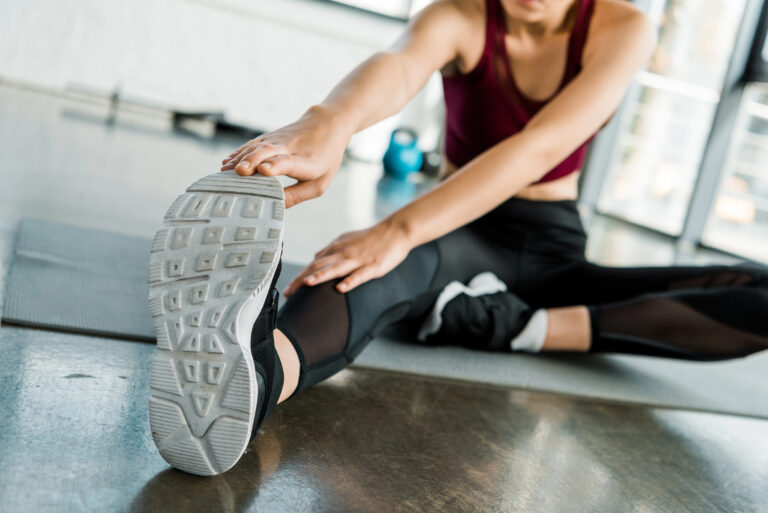
Spring into Sprint Interval Training for Fat Loss and better sleep

Depending on where you live, you may need to put a pin on sprints for the summer.
While I’m all for lifting heavy and building muscle, sprinkling in a sprint or two during the week can help melt away visceral fat. That deep, unhealthy fat that surrounds our organs and seems to have a hard time saying goodbye.
What is spring interval training?
Sprint interval training is a subset of HIIT, this type of training is usually 30 min or less and is great for women over 40. This type of training decreases cortisol, increases testosterone and growth hormone which support reparation, muscle function, fat loss, and better sleep due to switching to a parasympathetic state.
Sprints combine:
- High calorie burn per minute
- Elevated post-exercise metabolism
- Hormonal fat-mobilizing effects
- Muscle-preserving stimulus
That combination makes them one of the most efficient fat-loss tools available.
1. How to Effectively Do Sprint Interval Training
In this interview, Dr. Stacy Sims, exercise physiologist and nutrition scientist, shares how to get the most out of a sprint interval session (no track required!). Dr. Stacy is a great follow if you want to learn how to stop training like a man and instead work with your own physiology for better performance, health, and longevity.
Dr. Stacy Sims
It can be anything 30 seconds, full gas and then you have 1-3 min of total recovery, because we are looking for that central nervous system and being able to go again. We are not looking for fuel depletion, we are looking at that fast explosive movement in that top, top end to create an external stress.
Sprint Interval training doesn’t require running around a track. Sprint sessions can be done via battle ropes, a rowing machine, an assault bike, stairs, or even jump squats.
2. Sample Sprint Routines
This is the sprint interval training that Dr. Sims recommends for most people:
Exert 30 seconds all-out
Recover 1-3 minutes
Repeat 1-10 times (for most, it will be between 4-6x)
Another popular form of sprint interval training is the Norwegian 4×4. It helps your body burn fat by boosting metabolism, increasing calorie expenditure, and improving VO2 max.
A study in the Journal of Medicine & Science in Sports & Exercise demonstrated an increase of 11% in VO₂ max after eight weeks of following the 4×4 protocol. This research reveals why the 4×4 protocol is one of the best forms of exercise for improving oxygen uptake and heart function. In fact, the 4×4 has been promoted as a way to help your heart function like that of a 20 yr old.
Norwegian 4×4 (28 min)
10-minute warm-up
4 repetitions of 4 minutes at a high intensity (around 85-95% of your maximum heart rate)
3 minutes of active recovery (lower intensity) in between
3-minute cool-down.
10×1 Protocol (10 minutes)
1 minute of intense exercise
1 minute of rest
Repeat 10 times.
For most women, 2x/week is the sweet spot for sprint interval routines. More than 2x/week especially for women over 40, can create diminishing returns.
3. Sprints Support Quality Sleep
While sprint interval exercise isn’t a full metabolic antidote to a bad night of sleep, it can blunt the negative effect of sleep deprivation on insulin sensitivity.
According to the Journal of Sport Nutrition and Exercise Metabolism, sprint interval exercise helps with the metabolic (glucose) consequences of poor sleep; it also helps maintain mental sharpness.

Stabilizes circadian rhythm
Sprint work acts as a zeitgeber (time cue) for your body clock.
Increases deep sleep (slow-wave sleep)
Sprint training elevates:
- glycogen restoration demand
- growth hormone pulses
- muscle repair signaling
Improves sleep onset (falling asleep faster)
Short, high-intensity sprint bouts increase adenosine accumulation, the same sleep-pressure molecule that builds through the day and is blocked by caffeine.
More adenosine equates to a stronger drive to fall asleep.
Even for those with obstructive sleep apnea, HIIT was found to significantly improve perceived sleep quality and daytime sleepiness. These findings were based on 12 weeks of HIIT.